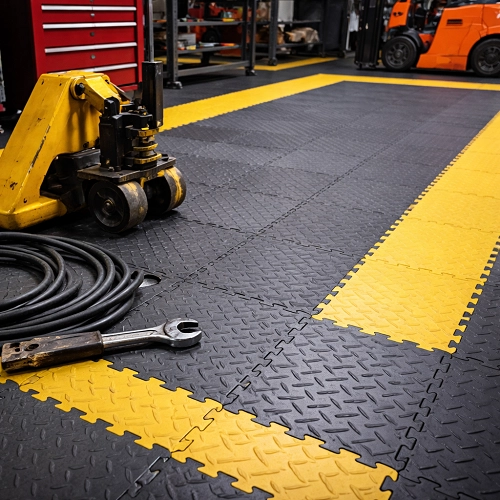
Polyvinyl chloride (PVC) industrial floor tiles are among the most versatile and durable flooring solutions used in a wide range of commercial and industrial settings. Combining strength, chemical resistance, and ease of maintenance, PVC tiles are designed to support heavy-duty operations while contributing to safe and efficient work environments.
1. What Are PVC Industrial Floor Tiles?
PVC industrial floor tiles are modular, interlocking flooring panels made primarily from polyvinyl chloride—a highly durable synthetic plastic polymer. These tiles are engineered to handle rigorous industrial use, from warehouses and manufacturing facilities to laboratories and retail spaces.
Unlike conventional flooring materials—such as poured concrete or adhesive-backed vinyl sheets—PVC industrial tiles offer modularity, flexibility, and easier replacement options. They come in a variety of thicknesses, surface textures, colors, and load-bearing capacities to suit specific industry demands.
2. Core Material and Manufacturing Process
2.1 The PVC Compound
The primary material used in these tiles is polyvinyl chloride (PVC)—a thermoplastic polymer known for:
- Chemical resistance
- Moisture resistance
- Durability
- Ease of processing
To enhance performance characteristics, PVC is blended with various additives:
- Plasticizers: Improve flexibility
- Impact modifiers: Enhance toughness
- UV stabilizers: Prevent degradation from sunlight exposure
- Fire retardants: Improve flame resistance
- Fillers (e.g., calcium carbonate): Increase strength and reduce cost
2.2 Manufacturing Techniques
There are two prevalent manufacturing processes:
Compression Molding
- PVC granules and additives are heated and pressed into molds under high pressure.
- Results in dense and uniformly structured tiles with excellent mechanical properties.
Calendering & Extrusion
- PVC mixture is heated and forced through rollers (calendered) or dies (extruded).
- Allows continuous production with precise control over thickness and surface texture.
Both methods yield resilient tiles designed to withstand long-term industrial use.
3. Design Features and Technical Specifications
3.1 Thickness and Size Options
PVC industrial floor tiles typically range in thickness from 2 mm to over 10 mm, depending on load requirements.
| Thickness (mm) | Typical Application |
| 2–4 mm | Light-duty areas (offices, retail spaces) |
| 5–8 mm | Medium-duty zones (workshops, light manufacturing) |
| 8–12 mm | Heavy-duty industrial floors (warehouses, vehicle traffic) |
Standard tile sizes include 300x300 mm, 500x500 mm, and 600x600 mm, though custom sizes are available.
3.2 Surface Textures
Texturing is critical for slip resistance and aesthetic appeal. Common surface finishes include:
- Embossed
- Hammered
- Diamond plate (raised pattern)
- Smooth (for cleanroom or low-dust environments)
These textures enhance traction and help minimize slips in high-traffic zones.
3.3 Load Bearing and Hardness
PVC floor tiles are engineered to withstand different load classifications:
EN 685 Classification – European standard identifying use & performance classes
- Class 23/31 – Light commercial
- Class 33/42 – Heavy commercial/industrial
- Class 43/51 – Very heavy industrial use
Hardness is commonly measured on the Shore D scale, with industrial tiles typically ranging from Shore D65 to D75+ for robust resistance against deformation.
3.4 Chemical and Thermal Resistance
PVC tiles are inherently resistant to common industrial chemicals such as:
- Oils and lubricants
- Greases
- Mild acids and alkalis
- Solvents (some, limited)
Typical thermal tolerance is up to 60–80°C (140–176°F) depending on formulation, making them suitable for environments with moderate heat exposure.
3.5 Fire and Safety Ratings
Quality PVC industrial tiles should comply with relevant fire safety standards (e.g., ASTM E648 / Class 1 for critical radiant flux) and include flame-retardant additives to help prevent flame propagation.
4. Advantages of PVC Industrial Floor Tiles
4.1 Durability and Longevity
PVC is highly resilient to impact, abrasion, and repetitive mechanical stresses. Well-manufactured tiles can last 10–20 years or longer in demanding industrial environments.
4.2 Chemical & Moisture Resistance
PVC’s resistance to water, moisture, and many chemicals makes it suitable for:
- Food production areas
- Laboratories
- Automotive workshops
- Cleanrooms (with smooth tile options)
4.3 Easy Installation and Replacement
Most PVC tiles feature interlocking edges, allowing:
- Rapid installation with no adhesives
- Minimal downtime
- Easy replacement of damaged sections without affecting the entire floor
4.4 Safety and Ergonomics
Textured surfaces improve traction, reducing slip risk. Additionally, PVC’s slight give underfoot helps reduce worker fatigue in standing workstations.
4.5 Cost-Effectiveness
When compared with seamless resinous flooring or polished concrete, PVC tiles offer lower initial cost and faster return on investment thanks to ease of maintenance and reduced downtime during installations.
5. Applications Across Industries
PVC industrial floor tiles are employed across diverse sectors:
5.1 Manufacturing and Warehousing
Tiles with higher thickness and load ratings handle:
- Forklift and pallet jack traffic
- Heavy equipment
- Frequent loading operations
5.2 Automotive Workshops
High chemical resistance makes PVC tiles ideal for:
- Oil and fuel exposure
- Brake fluid handling areas
- Work bays
5.3 Food and Beverage Facilities
Smooth, hygienic tile surfaces meet stringent cleanliness requirements. They withstand:
- Frequent washdowns
- Spilled liquids
- Sanitation chemicals
5.4 Laboratories and Healthcare
Antistatic variants and easy-to-clean surfaces support:
- Controlled environments
- Sensitive equipment areas
- Infection control protocols
6. Installation Best Practices
Correct installation ensures optimal performance. Steps typically include:
Surface Preparation
- Clean and level subfloor
- Remove cracks and contaminants
- Ensure moisture levels are within acceptable limits
Acclimatization
- Allow tiles to sit in installation area for 24–48 hours
Layout Planning
- Dry-lay tiles to determine pattern and fit
- Plan for edge treatment near walls and fixtures
Interlocking Assembly
- Click or tap tiles together using a rubber mallet
- Ensure tight seams to prevent movement
Edge and Trim Installation
- Install transition strips or cove base at perimeter
Post-Installation Inspection
- Check alignment and surface evenness
Professional installers may also employ adhesives in high-traffic zones or where moisture mitigation is needed.
7. Maintenance and Cleaning
Routine care preserves appearance and performance.
7.1 Daily Cleaning
- Dry sweep or vacuum to remove debris
- Use a neutral pH cleaner with warm water
- Avoid abrasive pads or harsh chemicals
7.2 Deep Cleaning
- Periodic machine scrubbing with soft brushes
- Rinse thoroughly to avoid residue buildup
7.3 Damage Repair
- Replace individual tiles if cracked or deteriorated
- Refinish high-wear areas with polish or protective sealants
8. Comparing PVC Industrial Tiles with Alternatives
| Feature | PVC Tiles | Epoxy Resin | Polished Concrete |
| Installation Speed | ★★★★★ | ★★★ | ★★ |
| Repairability | ★★★★★ | ★★ | ★★★ |
| Chemical Resistance | ★★★★ | ★★★★★ | ★★★ |
| Load Capacity | ★★★★ | ★★★★ | ★★★★★ |
| Comfort Underfoot | ★★★★ | ★★★ | ★★ |
| Cost | ★★★★ | ★★★ | ★★★★ |
PVC tiles excel in flexibility and ease of maintenance, while epoxy resin offers seamless surfaces and higher chemical resistance. Polished concrete provides unmatched load-bearing capacity but lacks modular repairability.
9. Environmental and Sustainability Considerations
PVC production and disposal have environmental impacts due to chlorine content and additives. However, leading manufacturers are:
- Utilizing recycled PVC content
- Reducing harmful plasticizers
- Offering tile take-back and recycling programs
Look for ISO 14001 environmental certifications and product life-cycle disclosures when selecting sustainable options.
10. Selecting the Right PVC Industrial Floor Tile
10.1 Evaluate Your Requirements
- Traffic intensity
- Load types
- Chemical exposure
- Cleanliness standards
- Budget constraints
10.2 Technical Specifications to Consider
- Thickness and load rating
- Surface texture
- Chemical and fire resistance
- Warranty and lifespan
10.3 Supplier Reliability
Choose manufacturers with proven performance records, technical support, and clear installation guidance.
PVC industrial floor tiles offer a smart, resilient flooring solution for a vast array of industrial and commercial applications. With robust mechanical properties, exceptional versatility, and easy installation and maintenance, PVC tiles help facilities improve safety, streamline operations, and manage long-term flooring costs effectively.